Objective fit
Does this action actually contribute to the requested outcome?
Nexus gives organisations selective control. One project may allow automatic formatting repairs, require approval for prices and always escalate public publication or sensitive customer actions.
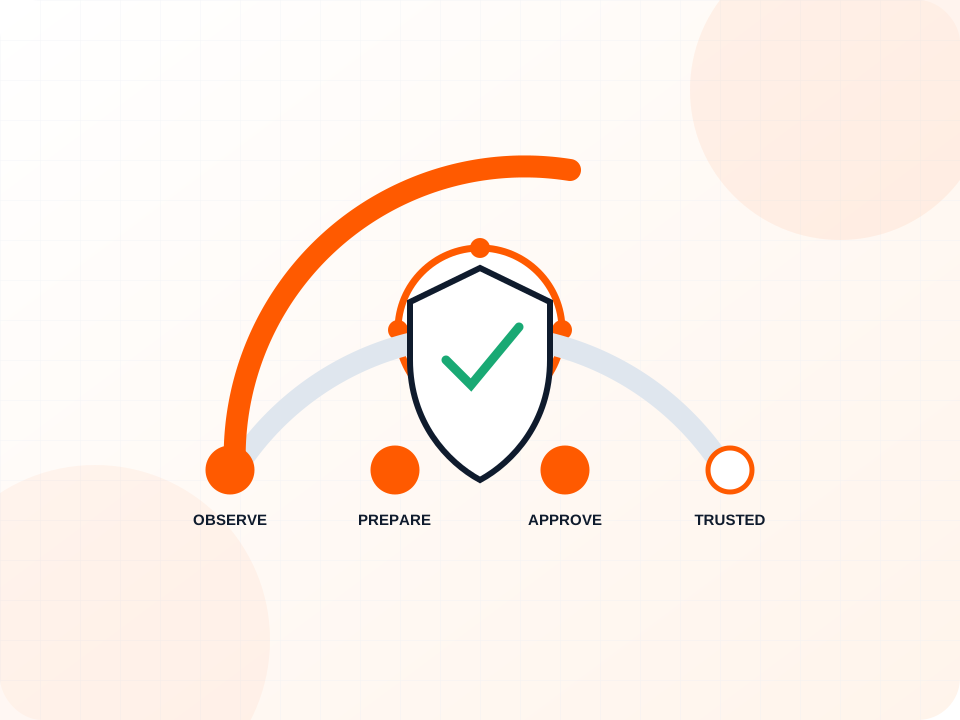
The same capability can have different authority in different projects and missions. Permission belongs to the job.
The environment remains unchanged.
Nexus separates inspection, preparation, execution and publication so company policy remains understandable.
Oversight checks objective fit, permission, scale, sensitivity, project boundary and confidence before sensitive work continues.
Does this action actually contribute to the requested outcome?
Is it allowed at this stage and in this project?
Is the number of affected items materially larger than expected?
Does the work expose, move or change protected information?
Has the mission changed enough to require a new approval?
Is there enough evidence to continue, or should a person decide?
The gain is not merely faster operation. It is the removal of human participation from ordinary cases while preserving judgement for the two that matter.
The case matches project rules and falls inside mission authority.
The pattern differs from normal, but evidence still supports a clear action.
Policy, preference, ambiguity, risk or responsibility requires a person.
The organisation sees the objective, current authority, activity, decisions and evidence throughout the mission.
Confirm the interpreted objective and important constraints.
Show meaningful mission state without exposing internal noise.
Explain the exact choice, evidence and consequence.
Report what changed, how it was checked and what remains.

Choose what Nexus may inspect, prepare, execute and publish for the work in front of it.