Ask the Project What Needs Your Attention Today
Combine active work, files, mission history and decisions into one current management view instead of reconstructing status manually.
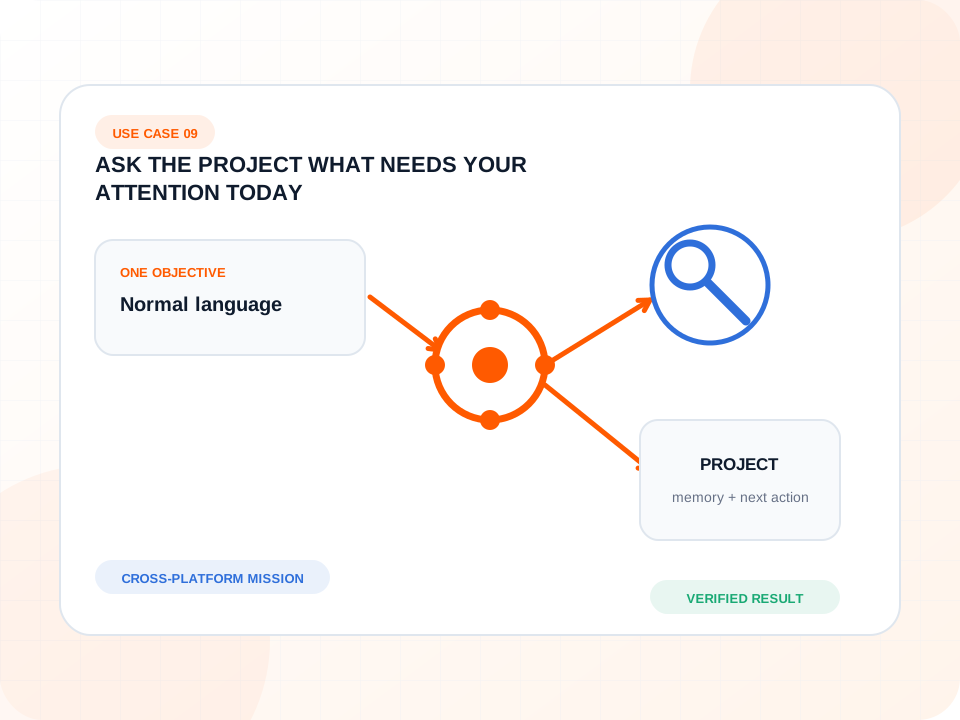
A project contains development, content, design, data imports, testing and management choices spread across files, messages and people.
Nexus should not return a generic meeting summary. It should expose current reality, dependencies and the smallest useful decision list.
Watch the work move through Nexus.
The screen keeps the objective visible while the project, systems, AI roles, progress, decisions and verification move through one operational record.
- Every status statement traces to a mission event or accepted result.
- Dependencies identify the exact waiting work.
- Routine activity is available in history but omitted from the attention brief.
- Decisions feed back into the affected missions.
How Nexus carries the objective from request to result.
The work stays attached to one outcome even when several systems and specialist AI roles contribute.
- Collect the latest state of authorised missions and project records.
- Separate completed work, active work, blockers and waiting decisions.
- Identify dependencies where one unresolved choice stops several workstreams.
- Compare current state with the previous accepted project position.
- Present the smallest useful management view.
- Let the manager answer decisions in context.
- Feed those decisions back into waiting missions and update project history.
Nexus removes routine operation, not responsibility.
The manager remains responsible for priorities, trade-offs, acceptance and business choices. Nexus removes the work of reconstructing status before those decisions can be made.
Attention brief ready
The project state is visible in one screen. Answering three decisions releases four waiting workstreams immediately.
The finished work remains inspectable.
The mission closes with source-linked evidence, a clear authority record and verification against the original objective.
Verified
Every status statement traces to a mission event or accepted result.
Verified
Dependencies identify the exact waiting work.
Verified
Routine activity is available in history but omitted from the attention brief.
Verified
Decisions feed back into the affected missions.
The result remains the centre of the mission.
Project status becomes connected to action rather than copied into another summary document.
One command bridge can coordinate more work.
Agencies, internal software teams, research programmes, marketing campaigns and administrative projects can use the same operating layer.
Open another complete Nexus workflow.
Every case uses its own project, systems, messages, decisions, metrics and result while preserving the same mission language.
Give a Small Business a General Digital Operations Layer
Let the owner move between business outcomes while Nexus coordinates the authorised file, website, data and information work underneath.
OPEN MISSION WORKFLOW
Prepare One Campaign Across CRM, Website and Email
Translate a commercial objective into a controlled audience, offer, landing page, message set and approval-ready send plan.
OPEN MISSION WORKFLOW
Build a Management Pack from Live Project Evidence
Collect approved numbers, project state, exceptions and source evidence into one coherent report without copying data by hand.
OPEN MISSION WORKFLOW
What would this mission look like inside your company?
Describe the project, outcome and decisions you want to retain. Nexus organises the operational work around them.